
AI × Capability
Where organisational expertise and AI fluency meet.
Organisations often have a firewall between two distinct and important skill sets: the people who understand how to transform an operating model, and the people who are deeply fluent in AI’s capabilities.
I’ve already spent twenty years doing the first: helping organisations transform to realise their potential. Wayne Gretzky said he skated to where the puck was going to be, not where it had been. That is why, since late 2024, I have intentionally focused on developing deep and applied AI knowledge.
The power of this intersection, and how it serves today’s organisational challenges, has never been so important.
Why this matters now
The people function is being handed a different job.
Three shifts, all under way, and a gap between them that few people can stand in.
From talent to the work itself
Redesign the work, not just the roles.
The question has moved from who we hire and how we keep them to what the work is, which parts of it a machine now does, and what people are for. The return sits in the redesign, not the tools.
More
Nearly 40 per cent of the skills used on the job are expected to change by 2030, and 77 per cent of employers plan to reskill in response to AI (World Economic Forum, Future of Jobs Report 2025, January 2025).
63 per cent of C-suite leaders say redesigning work for AI is where the return is in 2026; only 46 per cent of HR leaders agree (Mercer, Global Talent Trends 2026, January 2026).
Three quarters of frontline employees now use AI several times a week, but two thirds get little or no guidance on what to do with the time it frees (BCG, AI at Work, June 2026).
From headcount to humans and agents
Decide where people and agents each belong.
The skills-based organisation was the first step. The next starts from the value an organisation creates and the work that creates it, and puts humans and AI agents side by side in it, deliberately, with the capability to make that work.
More
Three in ten organisations have put AI agents into workflows, double the year before, and half of employees say there is no clear governance for mixed human-and-AI teams (BCG, AI at Work, June 2026).
McKinsey describes three quarters of jobs as a “messy middle” where tasks split between people and agents, new roles emerging (builders, orchestrators, strategists), and a “dual mandate” for HR: redesign the architecture of work for the enterprise, and transform itself first (McKinsey, June 2026).
Only a third of executives think their workforce is ready to work alongside AI (Mercer, January 2026).
From policy to governance
Which decisions stay human, and who says so.
Decision rights, ethics and accountability for what a model recommends are now a design problem, not a policy document, and the law has arrived before most organisations have.
More
The EU AI Act treats recruitment, performance evaluation, workplace monitoring and promotion or dismissal decisions as high-risk uses. The AI Omnibus, in force since 27 July 2026, moved those obligations to 2 December 2027 and softened the employer’s AI literacy duty from guaranteeing a level to supporting it (European Commission, July 2026).
Employee concern about job loss has risen from 28 to 40 per cent in two years, and only 19 per cent of HR leaders build that into their digital strategy (Mercer, January 2026).
Two circles
A career in the first circle. Since late 2024, building in the second.
Capability and transformation
Learn more about Capability and transformation
The capability a strategy needs, and the path to build it, differ in every organisation. I have built it in four industries.
- At Sanofi I was executive lead for CEO-sponsored work to simplify how a 90,000-person enterprise operates, improve organisational health and put always-on capability planning in place.
- At Shell I partnered with the Downstream leadership team on a transformation through an oil-price collapse: agility, simplification, decarbonisation and roughly $1 billion of structural cost out of the business.
- At Nike I built the people capability behind a new digital organisation, and co-led the growth strategy for the Jordan brand.
- At BlackRock I led talent, succession and the people side of integration through a merger.
Designing work for humans and AI
Learn more about Designing work for humans and AI
Start from the operating model, not the technology. Decide what people do, what AI does, and who stays accountable: AI recommends, leaders decide.
- At Sanofi I co-built AI and data fluency in the top team and out across the enterprise, through a CEO-endorsed programme with HEC Paris.
- I was people and culture lead for Sanofi’s AI adoption journey, putting decision intelligence in the flow of work for tens of thousands of decision makers through plai.
- At TalentOptima I apply the same method to my own practice: AI drafts and audits, and nothing publishes without an approved source.
Practical AI fluency
Learn more about Practical AI fluency
I build with these tools, not just about them.
- I built an AI-powered adaptive learning platform end to end: strategy, product definition, architecture and the AI capabilities themselves.
- I advise start-up founders on the same ground, from product strategy through to what the technology can and cannot yet do.
- My practice runs on a governed multi-agent system I built: one agent drafts, a second audits it independently, and nothing publishes without an approved source.
- At Sanofi I was one of fifteen senior leaders the CEO selected to drive enterprise-wide AI adoption.
This site is one example of the two coming together. See how I built it with AI.
The build story
Two years deeply hands-on with AI.
I subscribe to ‘Just Do It’ learning, from my Nike days. So I immersed myself in AI the way I learn best, by building with it.
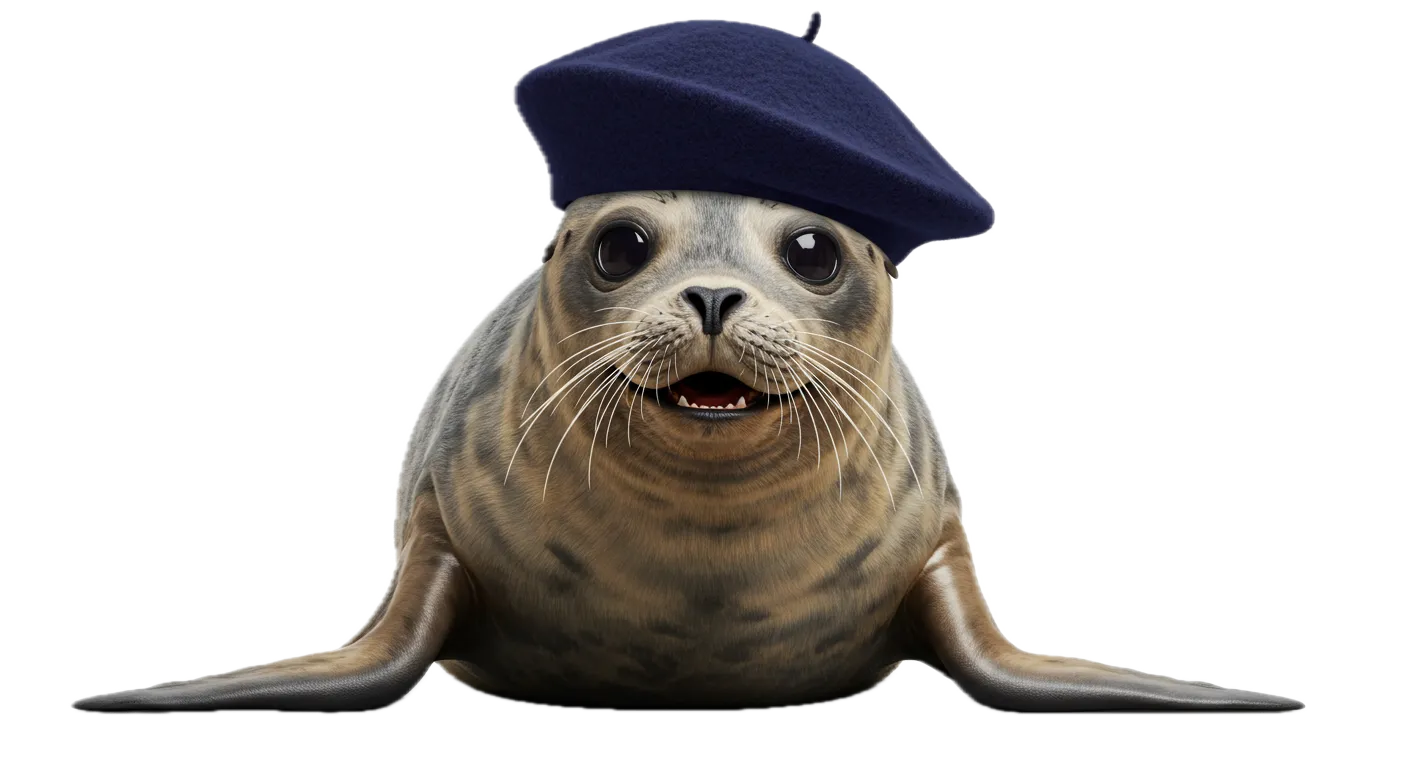
phoque.ai is an adaptive tutoring platform I took from an unmet need to a shipped product, through strategy, requirements, architecture, data, governance and production-grade engineering, directing two AI coding agents under written rules. Phoque is French for seal, a family joke that became the brand.
It turns a published curriculum into a full adaptive course in about half an hour, and it is in beta with real learners. Building it taught me the technology, its use cases, the human side of adopting it, where it creates value and where the traps are.
What this means for you
The three shifts above are the work. This is what I do about each one, with you.
The work, redesigned.
We start from the value you create and the work that creates it, not from a tool or a pilot. Your leaders and teams redesign it with me in the room, so it is theirs when I leave.
Humans and agents, side by side.
We decide, role by role, what a machine now does, what stays with people, and what capability that needs. Then we build it in the flow of real work, the way Drive Digital did for Sanofi’s top 150, because AI training that is not in the work does not stick.
AI recommends. Your leaders decide.
Decision rights, guardrails and the evidence trail that shows who decided what. I have built them in code and I build them in organisations; the principle is the same in both.
I work alongside your strategy advisers and technology partners, and I replace neither.